News Archiv
Wed, 10. September 2025
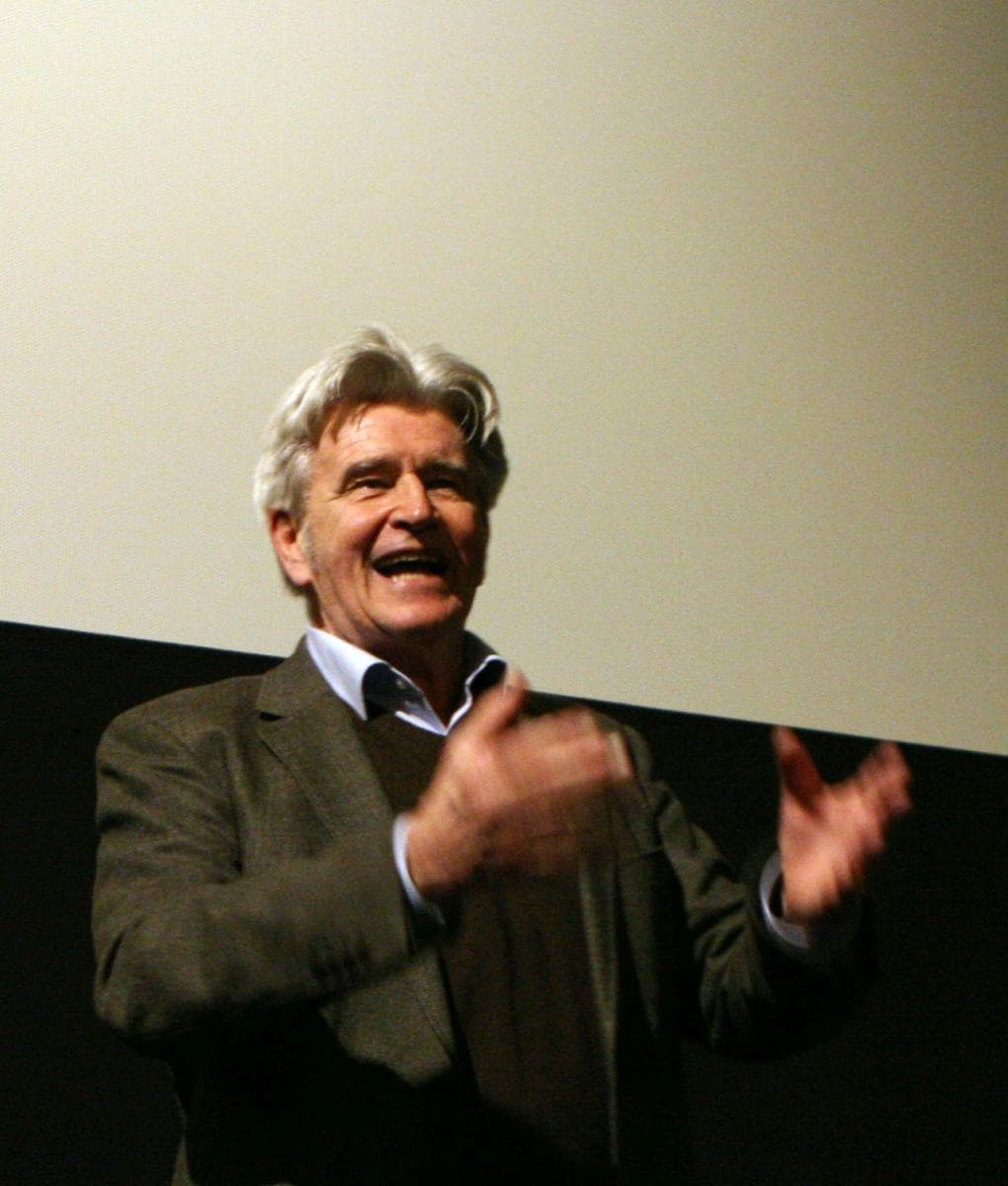
Harry Tomicek, 1945 – 2025
The Austrian Film Museum mourns the loss of Harry Tomicek, who was a close collaborator of our institution for decades as an author and scholar and who passed away on September 8, 2025. Tomicek studied philosophy in Vienna and received a PhD in 1976 for his dissertation Metaphysik und Nichts: ein Durchgang und Verlassen der Metaphysik Kants auf der Fragespur nach dem Nichts (Metaphysics and Nothingness: A Passageway and Abandoning of Kant's Metaphysics on the Trail of the Question of Nothingness]. This theoretical openness also marked his relationship to cinema: He understood film not as a mere object of analysis, but as an event which must be experienced and remembered in its full immediacy. He had been closely tied to the Austrian Film Museum since the 1970s. He was the author of many publications for our institution: From Jean Eustache (1977) to Yasujirō Ozu (1988), from Humphrey Jennings (1989) to Robert Gardner (1991), he drew connections that were illuminating and imbued with precision.
His program notes still remain impressive examples of how to think and write about the medium of film. For decades, his miniatures not only left a mark on our audiences' visual habits, for generations of film lovers they have had the force of "irrefutable" laws. Tomicek was not a critic in the classical sense: His essays do not decipher ready-made interpretations, but instead invite new ways of seeing, circling around films with his characteristically poetic passion for language. For four decades, he produced articles that appeared in publications such as Was ist Film (2010, FilmmuseumSynemaPublikationen) and the anthology Meine Reisen durch den Film, 1886–2019 (2020, Klever Verlag). He repeatedly made it clear that it is possible to experience film history not as canon, but instead as a personal journey marked by encounters.
Alongside his writing, he was also present as a teacher – at the School for Artistic Photography in Vienna as well as the universities of Vienna and Salzburg. He also leaves behind an original body of work as a filmmaker, including Das blaue Band (The Blue Ribbon, 2006–2011), Der Zug ein Leben (The Train, A Life, 1999–2012), and Porträt Stanislas T. (Portrait of Stanislas T., 1997–2013).
With Harry Tomicek, the Austrian Film Museum loses a decades-long companion and the city's film culture an inimitable voice. At the Austrian Film Museum, he will not be forgotten.