News
Thu, 26. March 2026
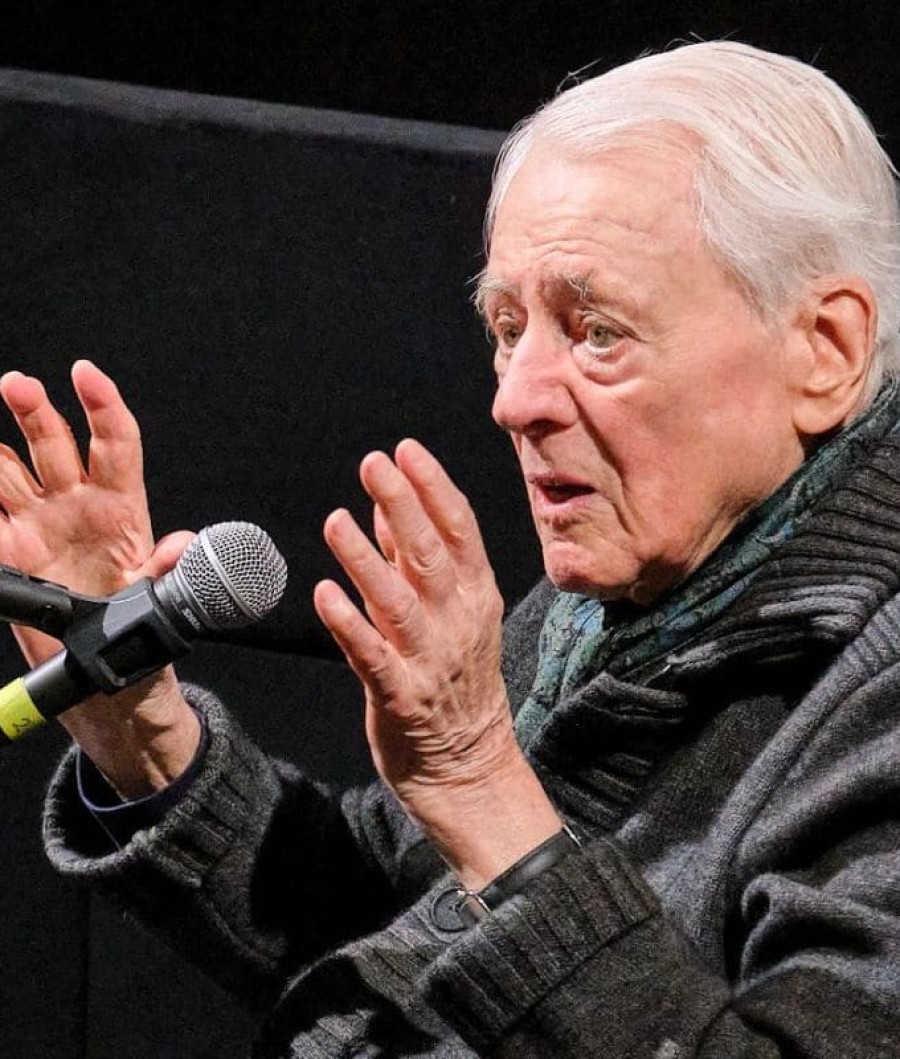
Alexander Kluge, 1932 – 2026
It is with profound shock and sadness that we learned of Alexander Kluge's passing on March 25, 2026. He will be remembered as an intellectual giant and a global cultural treasure; a media scientist whose philosophical insights can only be matched by his flair for poetry; godfather of New German Cinema whose nearly every gesture served (and continues to serve) as a clear ethical and moral signpost in the muddy landscape of the 20th and 21st century art and politics.
We choose to remember him as an embodiment of generosity.
He was instrumental in helping us prepare his retrospective in February 2026 at the Austrian Film Museum. He invented programs, suggesting previously unheard-of combinations and wildest juxtapositions; he created a series of brand-new works, granting us the privilege of more than a single world premiere; he ultimately even handcrafted a unique, richly illustrated 125-page catalog, Phoenix Cinema in Vienna – not a supplement to cinema, but a kind of "parallel cinema" – a montage of ideas, driven by curiosity and by Alexander Kluge's conviction that "cinema" is a concept in constant flux. Already in frail health, Kluge chose to act against his initial decision to stay at home and graced us first with an unexpected personal visit on February 4, and then by participating in a memorable Zoom conference that unfolded on what became his final birthday, on February 14. And after the retrospective was over, he surprised us with a kind offer to donate the entire digital-born segment of the retrospective films to our collection, thus granting us the privilege of easy future research and exhibition of his mostly later works that he was enormously proud of.
"A museum is not a repository for the past, but an active worksite (aktive Werkstatt)," Alexander Kluge says in his catalog. Over the past eight years, it has always been my goal as director of the Film Museum to establish it as such a "worksite." A place where no fixed, eternal truths apply (even though – or precisely because – the concept of truth is currently at the center of crises and cultural struggles), where questions are put on display and space is made for conversation: between art forms, between images, between humans and non-human actors.
We choose to remember Alexander Kluge as an embodiment of curiosity. Curiosity of the rarest kind; the kind that serves as both engine of scientific progress and societal harmony.
Michael Loebenstein