Alexander Kluge
January 22 to February 19, 2026
"One would like film history to continue, to shed its skin and start over afresh."
Since 1960, Alexander Kluge has been working as a filmmaker. At the same time, however, his film work is closely related to the stories in his books and the theoretical works which associate him with the philosopher and sociologist Osker Negt and the critical theory of the Frankfurt School (Theodor W. Adorno, Walter Benjamin). More recently, his books published by Suhrkamp Verlag and Spector Books feature QR codes linking to films. Conversely, his films often contain intertitles, like in silent films. The "concept of experience" (Erfahrungsbegriff) and the forms of the "dramatic structure of shortness" (Dramaturgie der Kürze) and the "dramatic structures of context," (Dramaturgien des Zusammenhangs) i.e. of length, are related to all three fields of activity.
As a co-author of the 1962 Oberhausen Manifesto, Kluge is one the founders of New German Film. His early works, such as Abschied von gestern (1966) and Die Artisten in der Zirkuskuppel: ratlos (1968), already used unconventional aesthetics. With Edgar Reitz and other filmmakers, he founded the Institut für Filmgestaltung at the Hochschule für Gestlatung in Ulm, a successor of the Bauhaus.
In 1988, Kluge relocated his filmic work – under independent license in a time slot on major private broadcasters – to television. Here, he established an "auteurist film on TV." His conversation partners – from Helge Schneider to Lilith Stangenberg and Hannelore Hoger as well as Hans Magnus Enzensberger, Joseph Vogl, and Ulrike Sprenger – become co-authors of the film. The same applies to many scientists, senior experts, and character actors.
Out of the "long march into the digital era," we are today experiencing rapid acceleration. In his film workshop, where he has worked for over 30 years, Kluge seeks out answers about this structural change in public space. The result is collaborations and innovative film forms, which provide answers to modernity as well as the uncanniness of our "ravaged time."
The publication forms of books, film/cinema, and cultural TV programs have more recently been joined by exhibitions: Starting with "Gärten der Kooperation" (Gardens of Collaboration) in Barcelona in 2016, closely related to the exhibition "Nachts träumen die Kulissen von ungesehene Bildern," (At Night, the Backdrops Dream of Unseen Images), which opens in Vienna at the Semper Depot on February 6, 2026 (a collaboration with the Academy of Fine Arts), simultaneous to the Film Museum's series. This legendary building was designed by the engineer Gottfriend Semper as a depot for the Burgtheater's sets and backdrops.
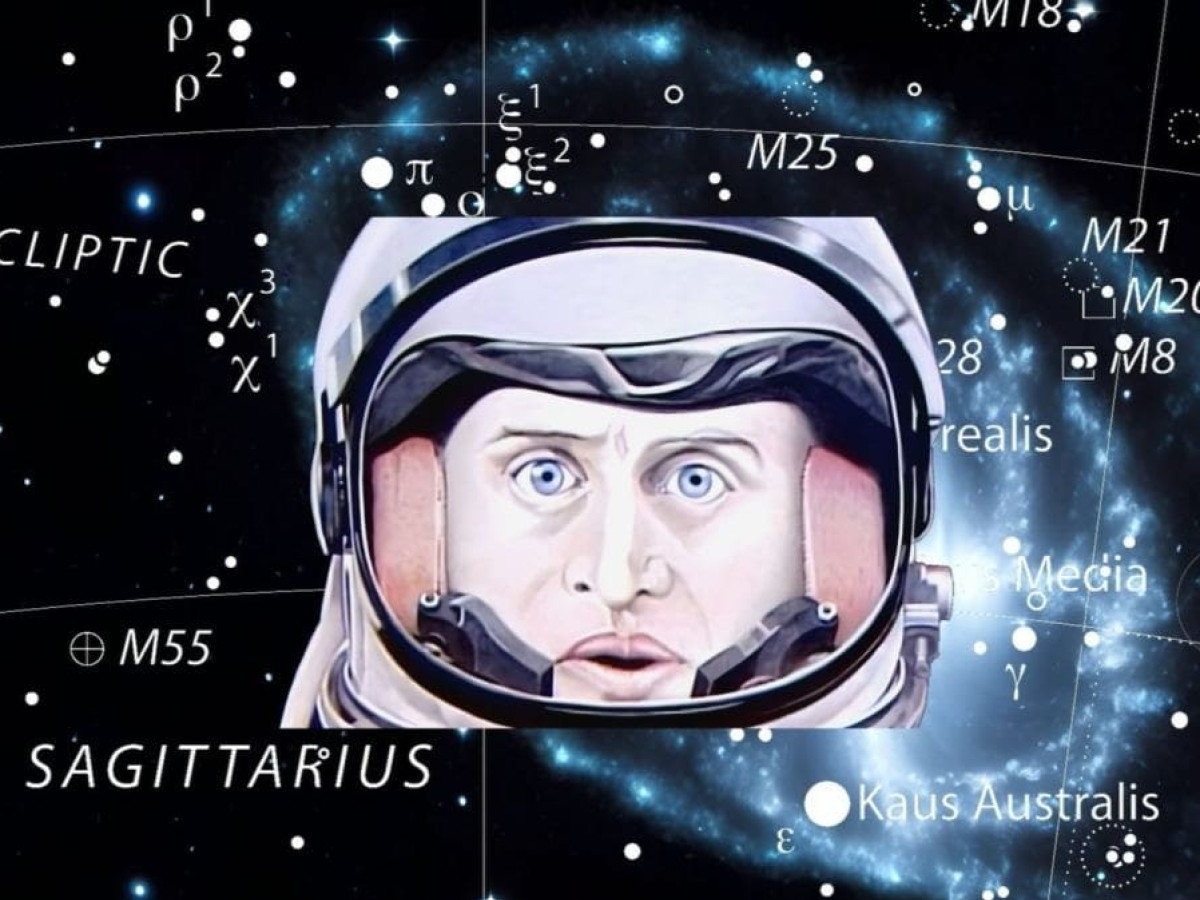
In the most recent films in the series and in the exhibitions, it is also a matter of Kluge's virtual camera which comes from the field of A.I. With the camera, the focus is on the "subjunctive of images." The classic movie camera can only record the present in front of its lens. Our emotions and the world we live in, however, are also related to experiences which lie beyond the horizon and, above all, to realms of possibility (the subjunctive) which accompany the present.
The film series shows 6 programs from the New German Film era, which were made before 1988, and 7 more recent programs. The structure of the exhibitions has a clear influence on the new films. This is based on the principle of constellations, i.e. of the context of the images. This can take the form of film collections lasting up to ten hours, as in the production Nachrichten aus der ideologischen Antike (News from Ideological Antiquity, 2008), which takes up Eisenstein's unmade project of adapting Karl Marx's Capital with contemporary means. But constellation is also the interlocking of text, image, music, and science (mathematics). These are completely different professions, about which, however, everyone has their own perspective. Together, they allow for diversity together, which is essentially simple. "Narrator reality" communicates in constellations all the time and us humans answer in our emotions, openness, and mental orientation with a similar diversity. Therefore, Alexander Kluge's latest feature film is also called Primitive Diversity (2025).
This principle and Kluge's work in general recall 1920s montage cinema. He goes back to Murnau, Fritz Lang, Eisenstein, Vertov, Hans Richter, and Dovzhenko. Likewise, he draws on Jean-Luc Godard and French philosophers like Deleuze, Guattari, and Derrida.
"If one wants to be a patriot of modernity and, at the same time, a patriot of film history, all that remains is to work on a counter algorithm." The revival of forms developed in the early years of film history as well as the forms of so-called "minute films" is in direct contrast to the use of the newest digital technologies. "I don’t know," says Kluge, "if A.I. will ever replace human intelligence. In any case, it is a faithful bookkeeper of billions of particulars. Just as my Arriflex camera often recorded something I had not seen on set, my virtual (A.I.) camera is a valuable tool." Such a tool is necessary in the fight for an experienced, independent public that also knows how to protect itself from the dangers of digital superiority.
For Alexander Kluge, film remains a form of emotion and of thinking that ties together history and the present. His work does not aim for illustration, but insight. This attitude also shows his proximity to Walter Benjamin. In the process, Kluge has never left the cinema behind. But film's world of forms has changed. The metaphor for this is the Ancient Greek bird, the phoenix. It burns and from its ashes, it rises again with fresh vitality. (Christian Stampfl / Translation: Ted Fendt)
In collaboration with the Academy of Fine Arts
"One would like film history to continue, to shed its skin and start over afresh."
Since 1960, Alexander Kluge has been working as a filmmaker. At the same time, however, his film work is closely related to the stories in his books and the theoretical works which associate him with the philosopher and sociologist Osker Negt and the critical theory of the Frankfurt School (Theodor W. Adorno, Walter Benjamin). More recently, his books published by Suhrkamp Verlag and Spector Books feature QR codes linking to films. Conversely, his films often contain intertitles, like in silent films. The "concept of experience" (Erfahrungsbegriff) and the forms of the "dramatic structure of shortness" (Dramaturgie der Kürze) and the "dramatic structures of context," (Dramaturgien des Zusammenhangs) i.e. of length, are related to all three fields of activity.
As a co-author of the 1962 Oberhausen Manifesto, Kluge is one the founders of New German Film. His early works, such as Abschied von gestern (1966) and Die Artisten in der Zirkuskuppel: ratlos (1968), already used unconventional aesthetics. With Edgar Reitz and other filmmakers, he founded the Institut für Filmgestaltung at the Hochschule für Gestlatung in Ulm, a successor of the Bauhaus.
In 1988, Kluge relocated his filmic work – under independent license in a time slot on major private broadcasters – to television. Here, he established an "auteurist film on TV." His conversation partners – from Helge Schneider to Lilith Stangenberg and Hannelore Hoger as well as Hans Magnus Enzensberger, Joseph Vogl, and Ulrike Sprenger – become co-authors of the film. The same applies to many scientists, senior experts, and character actors.
Out of the "long march into the digital era," we are today experiencing rapid acceleration. In his film workshop, where he has worked for over 30 years, Kluge seeks out answers about this structural change in public space. The result is collaborations and innovative film forms, which provide answers to modernity as well as the uncanniness of our "ravaged time."
The publication forms of books, film/cinema, and cultural TV programs have more recently been joined by exhibitions: Starting with "Gärten der Kooperation" (Gardens of Collaboration) in Barcelona in 2016, closely related to the exhibition "Nachts träumen die Kulissen von ungesehene Bildern," (At Night, the Backdrops Dream of Unseen Images), which opens in Vienna at the Semper Depot on February 6, 2026 (a collaboration with the Academy of Fine Arts), simultaneous to the Film Museum's series. This legendary building was designed by the engineer Gottfriend Semper as a depot for the Burgtheater's sets and backdrops.
In the most recent films in the series and in the exhibitions, it is also a matter of Kluge's virtual camera which comes from the field of A.I. With the camera, the focus is on the "subjunctive of images." The classic movie camera can only record the present in front of its lens. Our emotions and the world we live in, however, are also related to experiences which lie beyond the horizon and, above all, to realms of possibility (the subjunctive) which accompany the present.
The film series shows 6 programs from the New German Film era, which were made before 1988, and 7 more recent programs. The structure of the exhibitions has a clear influence on the new films. This is based on the principle of constellations, i.e. of the context of the images. This can take the form of film collections lasting up to ten hours, as in the production Nachrichten aus der ideologischen Antike (News from Ideological Antiquity, 2008), which takes up Eisenstein's unmade project of adapting Karl Marx's Capital with contemporary means. But constellation is also the interlocking of text, image, music, and science (mathematics). These are completely different professions, about which, however, everyone has their own perspective. Together, they allow for diversity together, which is essentially simple. "Narrator reality" communicates in constellations all the time and us humans answer in our emotions, openness, and mental orientation with a similar diversity. Therefore, Alexander Kluge's latest feature film is also called Primitive Diversity (2025).
This principle and Kluge's work in general recall 1920s montage cinema. He goes back to Murnau, Fritz Lang, Eisenstein, Vertov, Hans Richter, and Dovzhenko. Likewise, he draws on Jean-Luc Godard and French philosophers like Deleuze, Guattari, and Derrida.
"If one wants to be a patriot of modernity and, at the same time, a patriot of film history, all that remains is to work on a counter algorithm." The revival of forms developed in the early years of film history as well as the forms of so-called "minute films" is in direct contrast to the use of the newest digital technologies. "I don’t know," says Kluge, "if A.I. will ever replace human intelligence. In any case, it is a faithful bookkeeper of billions of particulars. Just as my Arriflex camera often recorded something I had not seen on set, my virtual (A.I.) camera is a valuable tool." Such a tool is necessary in the fight for an experienced, independent public that also knows how to protect itself from the dangers of digital superiority.
For Alexander Kluge, film remains a form of emotion and of thinking that ties together history and the present. His work does not aim for illustration, but insight. This attitude also shows his proximity to Walter Benjamin. In the process, Kluge has never left the cinema behind. But film's world of forms has changed. The metaphor for this is the Ancient Greek bird, the phoenix. It burns and from its ashes, it rises again with fresh vitality. (Christian Stampfl / Translation: Ted Fendt)
In collaboration with the Academy of Fine Arts
Alexander Kluge: Nachts träumen die Kulissen von ungesehenen Bildern
In the Prospekthof, Alexander Kluge stages an exhibition that, following the idea of a theater performance, uses video stations as actors and relates them to plaster casts from the Glyptothek of the Art Collections of the Academy of Fine Arts.
February 6 to 24, 2026 / Opening: February 5, 6 p.m.
Prospekthof, Atelierhaus, Academy of Fine Arts Vienna, Lehárgasse 8, 1060 Vienna
Further information on the exhibition and accompanying program: www.akbild.ac.at
Further information on the exhibition and accompanying program: www.akbild.ac.at