In Person:
Nora Sweeney
January 15, 2026
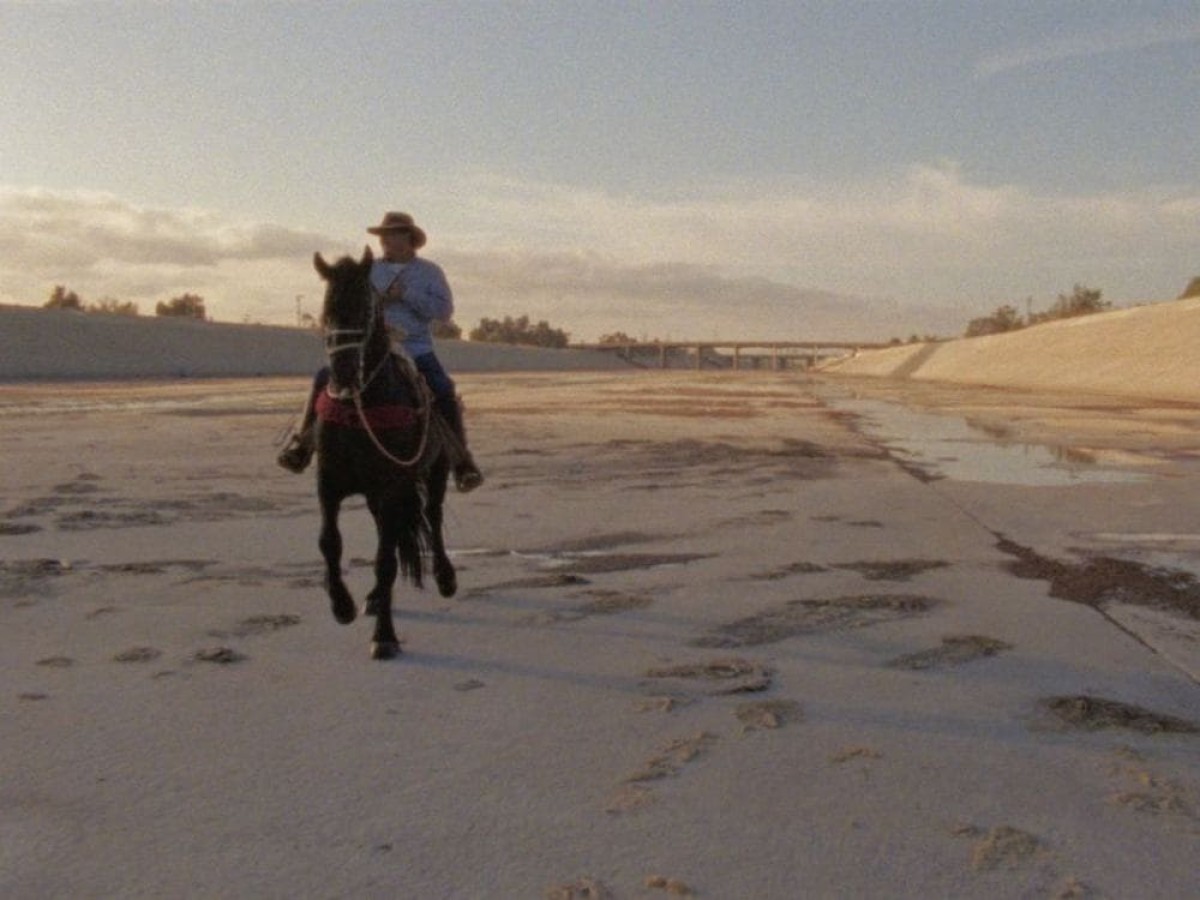
In her films, Nora Sweeney makes portraits of both people and places: The films trace the poetry of everyday life. In her most recent work, The Concrete River, she explores the terrain along the Los Angeles River as a public space used by people in very different ways. In her earliest works, too, the filmmaker is attentive to the connection between people and (city) landscape when she observes a group of seniors who spend their days in a park (Birds of a Feather) or accompanies migrant workers in their daily labor at an orange orchard (Sweet Oranges). Sweeney shoots on 16mm and uses the aesthetic possibilities analog film stock offers to investigate the world artistically. Conversations and sounds are not combined synchronously with the picture, but create collage-like soundtracks which are more associative than informative. This allows Sweeney to get very close to her protagonists, for instance when she portrays a pair of brothers (Fausto and Emilio) who continue to pursue their profession as barbers with their own shop even in old age. (Andrea Pollach / Translation: Ted Fendt)
In Collaboration with The Golden Pixel Cooperative
In her films, Nora Sweeney makes portraits of both people and places: The films trace the poetry of everyday life. In her most recent work, The Concrete River, she explores the terrain along the Los Angeles River as a public space used by people in very different ways. In her earliest works, too, the filmmaker is attentive to the connection between people and (city) landscape when she observes a group of seniors who spend their days in a park (Birds of a Feather) or accompanies migrant workers in their daily labor at an orange orchard (Sweet Oranges). Sweeney shoots on 16mm and uses the aesthetic possibilities analog film stock offers to investigate the world artistically. Conversations and sounds are not combined synchronously with the picture, but create collage-like soundtracks which are more associative than informative. This allows Sweeney to get very close to her protagonists, for instance when she portrays a pair of brothers (Fausto and Emilio) who continue to pursue their profession as barbers with their own shop even in old age. (Andrea Pollach / Translation: Ted Fendt)
In Collaboration with The Golden Pixel Cooperative