The Austrian Film Museum received the private collection of Hugo Wiener and Cissy Kraner as a deposit from the Wienbibliothek im Rathaus in 2020. The collection offers a unique audiovisual record of two central figures of Austrian postwar entertainment culture, and provides insight into the worlds of cabaret, operetta, and revue theater in Vienna during the 1960s and 1970s.
Hugo Wiener (1904–1993), writer, composer, and long-time collaborator of Karl Farkas at the Simpl cabaret ensemble, was among the most influential authors of postwar Viennese cabaret. As a performer, singer, and cabaret actress, Cissy Kraner (1918–2012) became one of the most recognizable figures of Austrian cultural life after 1948. Their collaboration produced some of the most memorable works of Viennese cabaret and entertainment music, including "Der Novak lässt mich nicht verkommen," written by Wiener and famously performed by Kraner. Married since 1943, Wiener and Kraner formed one of the defining artistic and personal partnerships of postwar Austria, working across cabaret, operetta, revue theater, radio, and television.
Film Collection Insights
Wiener-Kraner Film Collection Deposit
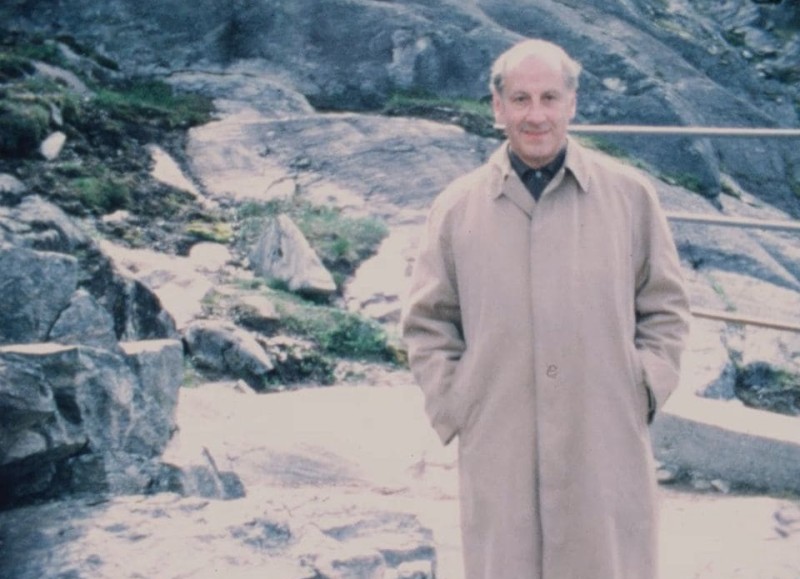
The collection consists primarily of amateur 8mm and Super 8mm silent films produced between the early 1960s and the 1970s, containing both black-and-white and color footage. The material includes recordings of cabaret and operetta performances, travel films, private-life recordings, behind-the-scenes footage from film productions, and an audio recording of the radio program "Wiener Brettl." Together, these materials document Wiener and Kraner as both performers and a married couple, at home, on stage, and during their travels.
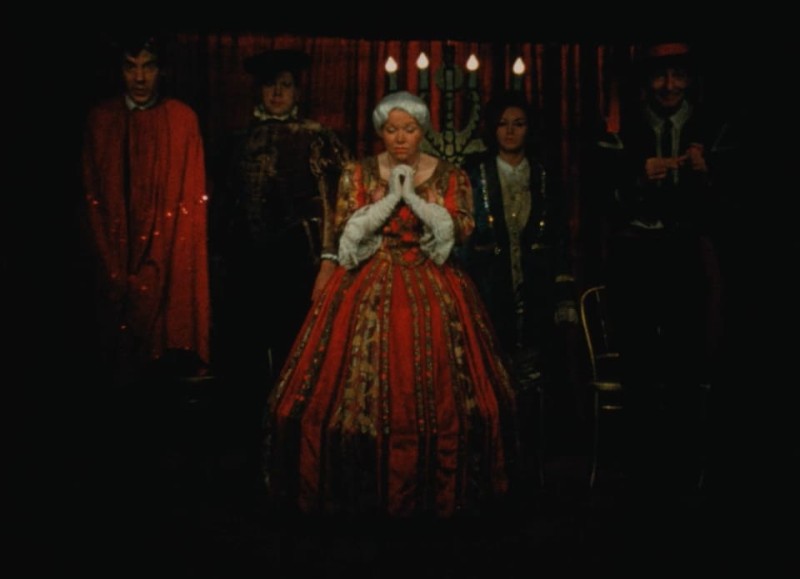
Among the most significant parts of the collection are several amateur recordings of stage performances associated with the Simpl Ensemble and the cabaret group Der Würfel. Filmed from the audience on small-gauge amateur stock and likely recorded by Hugo Wiener himself, these reels preserve fragments of performances that survive only incompletely in institutional archives and are otherwise documented primarily through scripts, reviews, photographs, and other paper-based sources. Despite technical limitations caused by low lighting conditions and unstable camerawork, they provide rare evidence of staging, costume design, movement, and performance practices within Viennese cabaret culture.
Among the most significant parts of the collection are several amateur recordings of stage performances associated with the Simpl Ensemble and the cabaret group Der Würfel. Filmed from the audience on small-gauge amateur stock and likely recorded by Hugo Wiener himself, these reels preserve fragments of performances that survive only incompletely in institutional archives and are otherwise documented primarily through scripts, reviews, photographs, and other paper-based sources. Despite technical limitations caused by low lighting conditions and unstable camerawork, they provide rare evidence of staging, costume design, movement, and performance practices within Viennese cabaret culture.
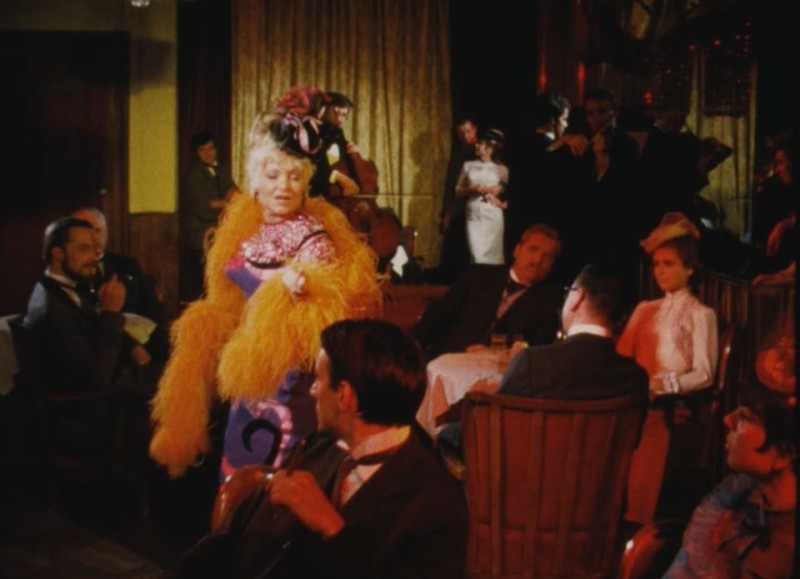
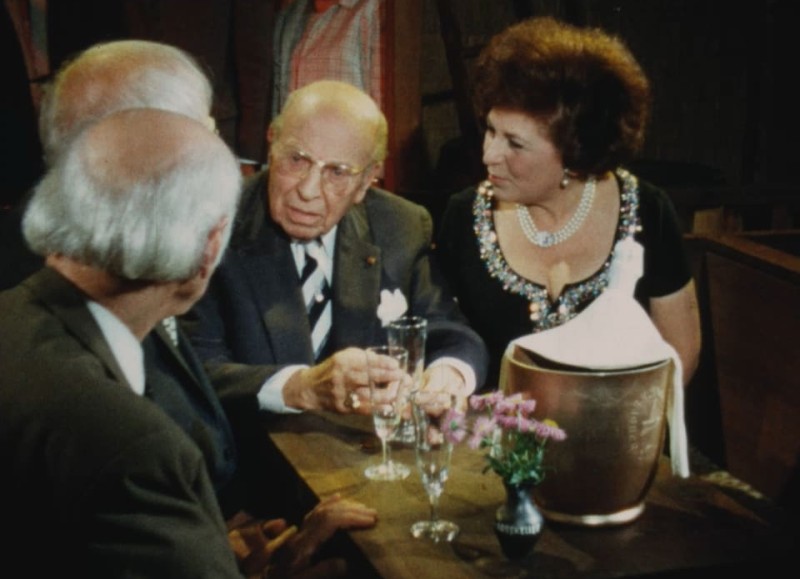
Several films document productions associated with the Simpl, one of the most important institutions of Austrian cabaret after 1950. Recordings of revues such as Wer mit wem? (1962) andn Wir gehen fremd! (1964), written by Karl Farkas and Hugo Wiener, preserve excerpts of performances featuring Cissy Kraner, alongside performers including Maxi Böhm, Ossy Kolmann, Elly Naschold, and Fritz Muliar. Other recordings capture later productions, such as the anniversary program 60 Jahre jung (1972), staged following the death of Karl Farkas, when the theatre continued under the direction of Maxi Böhm, with Hugo Wiener returning as author. Footage connected to Der Würfel, likely filmed at the Theater im Savoy around 1966–1967, documents a parallel strand of Viennese cabaret culture, featuring performers such as Günter Tolar, Peter Lodynski, Herwig Seeböck, and Cissy Kraner. Together, these recordings reflect the diversity of Vienna's cabaret scene during a period in which cabaret occupied a central position between satire, political commentary, and musical entertainment.
Wer mit wem? A Revue by Karl Farkas and Hugo Wiener, 1962
Beyond cabaret, the collection contains footage from film and operetta productions, including behind-the-scenes recordings from Wenn die kleinen Veilchen blühen (1968) and Die Landstreicher (1967), as well as recordings of performances at the Volksoper Wien and the Bregenzer Festspiele. Particularly noteworthy are recordings of productions such as Die Csárdásfürstin and Frühjahrsparade, the latter adapted for the Volksoper by Hugo Wiener in 1964. These films reveal the extent of Wiener and Kraner's activities beyond cabaret, connecting them to the worlds of operetta, film, and theatre.
Behind-the-scenes footage from the film Wenn die kleinen Veilchen blühen, Graz, 1968
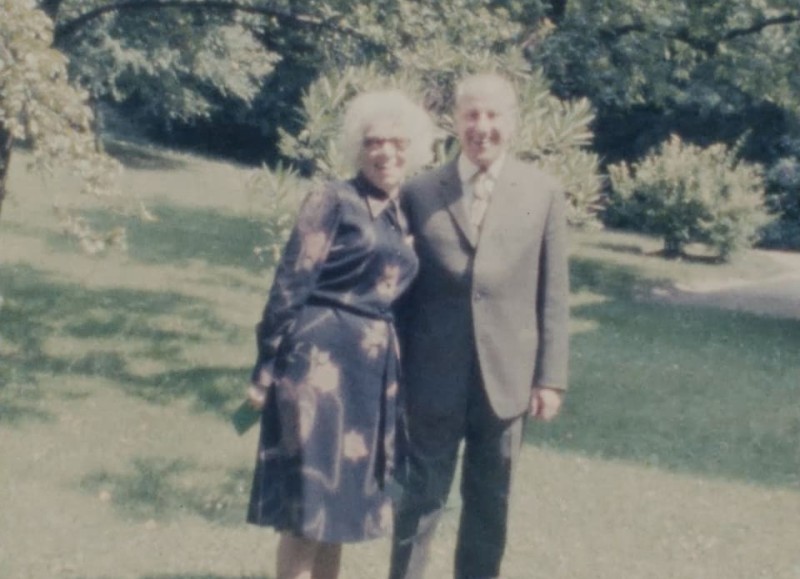
The collection also provides insight into the couple's private lives and travels. Repeated recordings at Villa Rauhenstein in Baden show Wiener and Kraner in their garden, hosting visitors, and documenting their surroundings. Alongside the performance recordings, these films position the collection between home-movie practice and the self-documentation of a prominent artistic partnership, revealing aspects of everyday life largely absent from public representations of their careers. Other films record journeys through Austria, Italy, Norway, Israel, Greece, Malta, Turkey, and the Soviet Union, reflecting both the couple’s personal travels as well as journeys connected to their artistic activity.
Villa Rauhenstein, a visit to the garden with a photographer. Baden, 1964. Amateur film
Sicily, Cruise, 1969. Amateur travel film
Seen together, the Wiener–Kraner collection forms a hybrid audiovisual archive situated between personal memory and cultural history. As amateur recordings of performances, travel, and everyday life, the films preserve dimensions of the Viennese theater and entertainment scene that frequently remain absent from institutional archives and written documentation. At the same time, they offer a rare perspective on the professional and private lives of one of Austria's most influential artistic partnerships, and on the cultural environment in which Viennese cabaret evolved during the postwar decades. (Dakota Tutunaru)
With kind permission of the Hugo Wiener Privatstiftung
Dakota Tutunaru was an intern in the Austrian Film Museum's film collection from December 2025 to September 2026. The film collection of Hugo Wiener and Cissy Kraner was one of the collections from the Wienbibliothek deposit that she worked on during her internship.
With kind permission of the Hugo Wiener Privatstiftung
Dakota Tutunaru was an intern in the Austrian Film Museum's film collection from December 2025 to September 2026. The film collection of Hugo Wiener and Cissy Kraner was one of the collections from the Wienbibliothek deposit that she worked on during her internship.