Book Presentation and Film Program:
Karl Sierek: Wege. Spuren und Bahnen der Bewegung im Kino (Vol 5)
November 9, 2026
The six volume book series Pathways: Traces and Tracks of Movement in Cinema (Wege. Spuren und Bahnen der Bewegung im Kino) brings together path-building and film-making. Since its beginnings, cinema has presented, reflected and differentiated in moving images the furrowing of traces and laying of tracks through landscapes and cityscapes. One of humanity's oldest skills, the making of paths, encounters another one that is somewhat aged, the production of movement in pictures. The two cultural techniques of the transport of goods and images accompany one another through movie theaters and alternately cross-fertilize each other. They both retrospectively draw traces and prospectively blaze tracks. These trackings and tracings lead to the wealth of aesthetic expression that continue to lure us to the movies today.
The fifth volume turns to the investigation of use-dependent goal-determination. The study of the where? and how? of pathways is followed by an interest in where to? The first part interrogates written announcements of goals, such as signposts and town limits signs. The second part turns to vertical pathways: cliffs, which demonstrate walking on hands, elevators and stairs, which prove to be determinants of social stratification. The third chapter returns to the horizontality of filmic path-traveling. It investigates exits, detours, and wrong ways. To discuss one of the multifaceted functions of filmic stairs, a brief example of the overwriting of Eisenstein's Odessa Steps sequence is used: Odessa Crash Test (Notes on Film 09) (Norbert Pfaffenbichler, 2014) subjects the baby carriage shots to a precise experiment, putting the combinatorics of verticalities to the test. (Karl Sierek / Translation: Ted Fendt)
Karl Sierek, Wege. Spuren und Bahnen der Bewegung im Kino (Vol. 5), Wien: Sonderzahl 2026
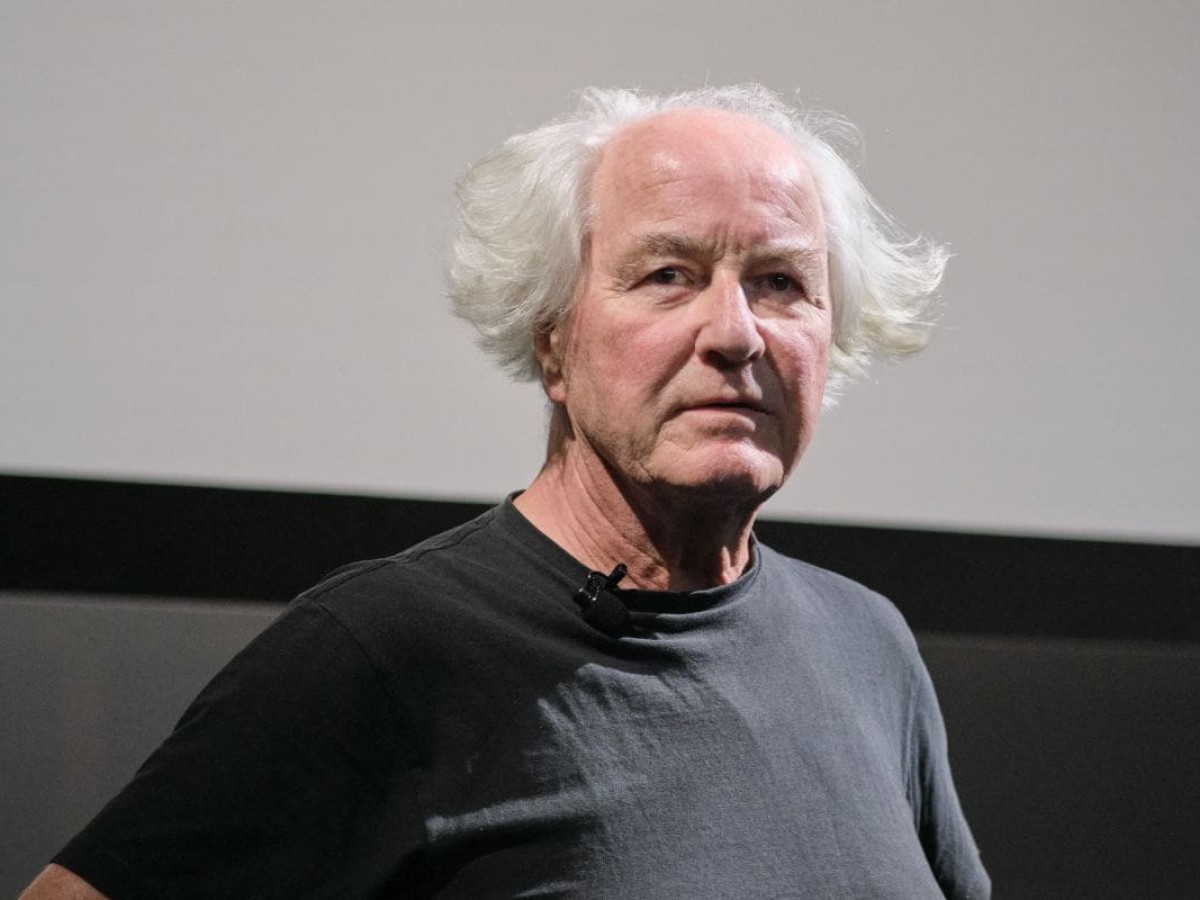
With Karl Sierek and Dieter Bandhauer in attendance
The six volume book series Pathways: Traces and Tracks of Movement in Cinema (Wege. Spuren und Bahnen der Bewegung im Kino) brings together path-building and film-making. Since its beginnings, cinema has presented, reflected and differentiated in moving images the furrowing of traces and laying of tracks through landscapes and cityscapes. One of humanity's oldest skills, the making of paths, encounters another one that is somewhat aged, the production of movement in pictures. The two cultural techniques of the transport of goods and images accompany one another through movie theaters and alternately cross-fertilize each other. They both retrospectively draw traces and prospectively blaze tracks. These trackings and tracings lead to the wealth of aesthetic expression that continue to lure us to the movies today.
The fifth volume turns to the investigation of use-dependent goal-determination. The study of the where? and how? of pathways is followed by an interest in where to? The first part interrogates written announcements of goals, such as signposts and town limits signs. The second part turns to vertical pathways: cliffs, which demonstrate walking on hands, elevators and stairs, which prove to be determinants of social stratification. The third chapter returns to the horizontality of filmic path-traveling. It investigates exits, detours, and wrong ways. To discuss one of the multifaceted functions of filmic stairs, a brief example of the overwriting of Eisenstein's Odessa Steps sequence is used: Odessa Crash Test (Notes on Film 09) (Norbert Pfaffenbichler, 2014) subjects the baby carriage shots to a precise experiment, putting the combinatorics of verticalities to the test. (Karl Sierek / Translation: Ted Fendt)
Karl Sierek, Wege. Spuren und Bahnen der Bewegung im Kino (Vol. 5), Wien: Sonderzahl 2026
With Karl Sierek and Dieter Bandhauer in attendance
Related materials
Program Wege (3) - Oct / Nov 2024
Link Sonderzahl Verlag