Suso Cecchi D'Amico
January 6 to March 3, 2027
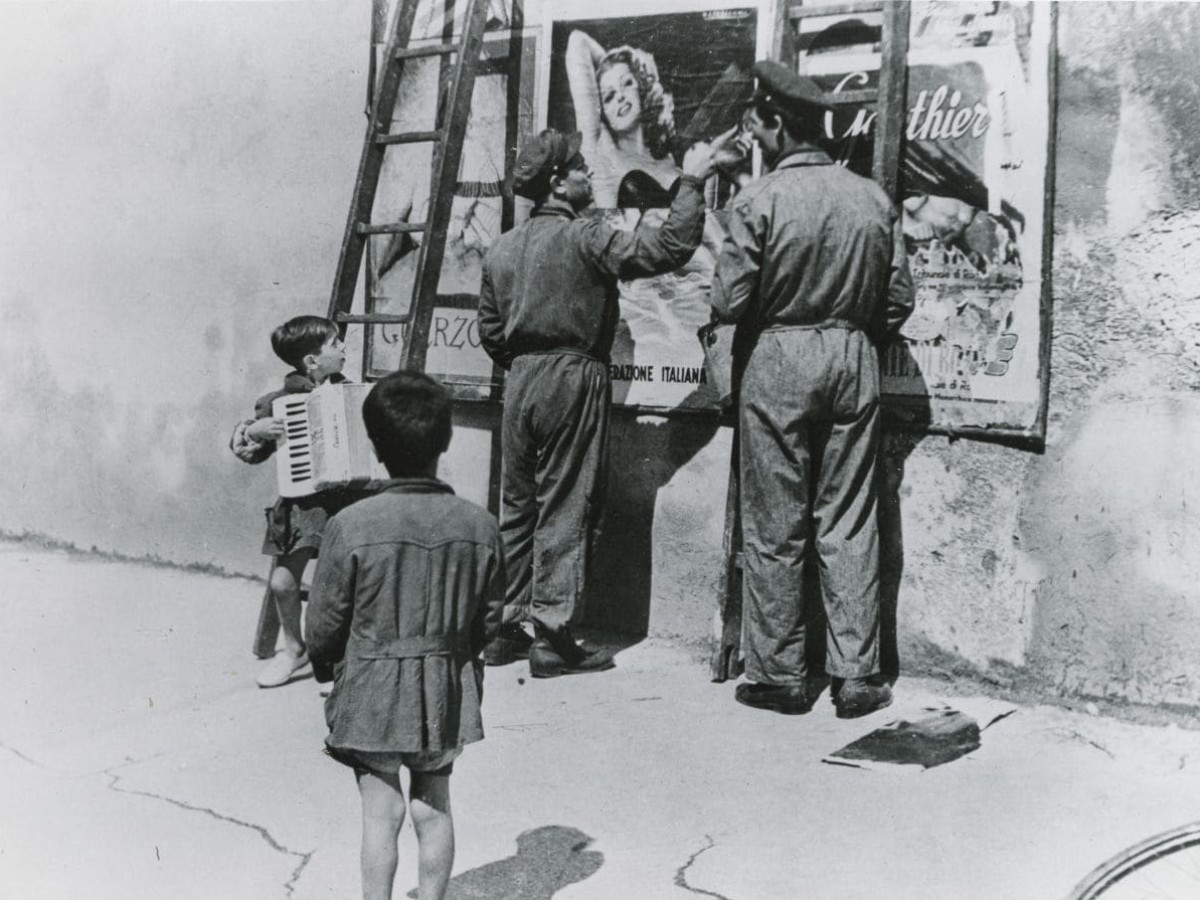
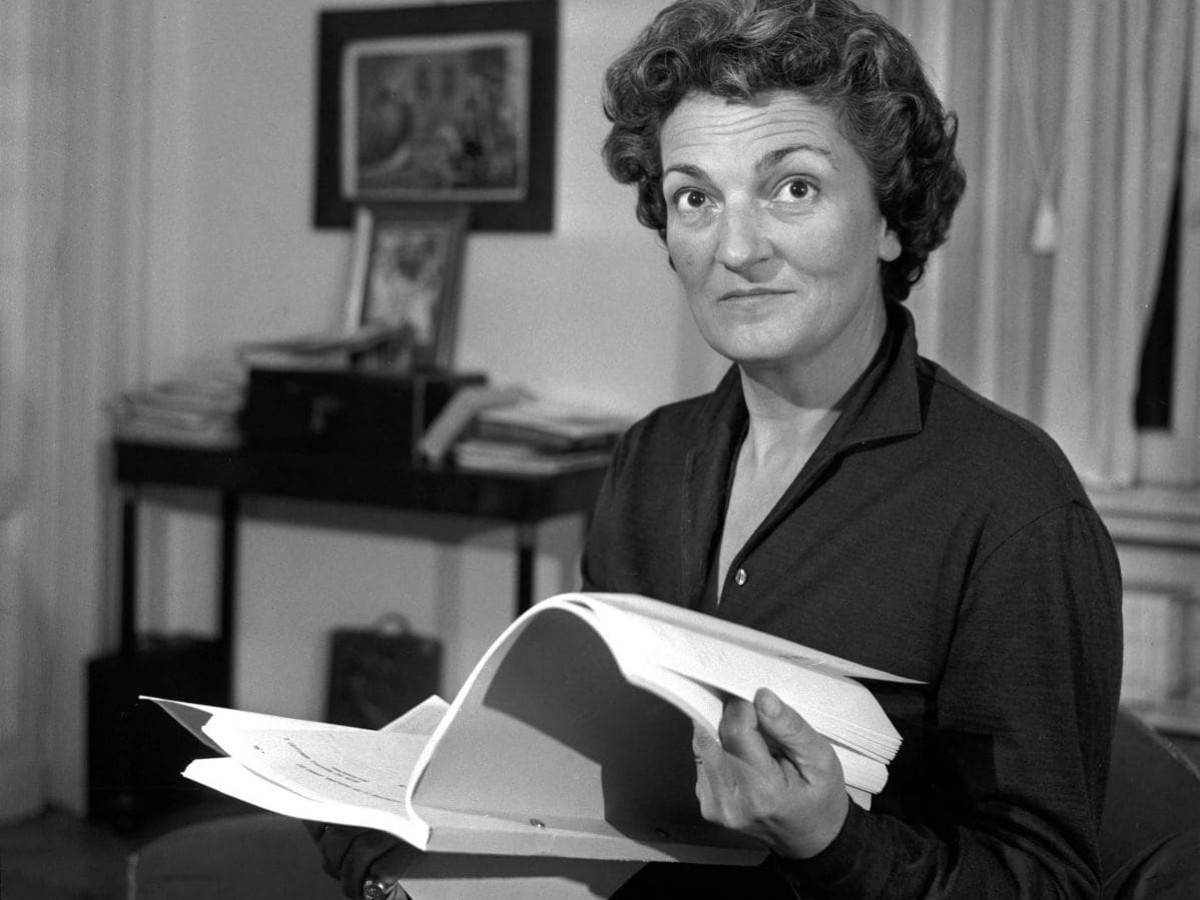
No other personality was involved in so many classics of Italian cinema as Suso Cecchi D'Amico (1914-2010). For more than six decades, she collaborated with almost every major director in the postwar era. While outside Italy many viewers had no idea that a woman was hidden behind the nickname "Suso," in her homeland Giovanna Cecchi (her birth name) was simply la signora del cinema italiano: "the lady of Italian cinema" began her career in 1946, working from the start on Italian Neorealist classics like Vittorio De Sica's Ladri di biciclette (Bicycle Thieves, 1948). The rest of Cecchi D'Amico's career reflects the development of the nation's cinema and, likewise, encompasses many trends and genres, although two developments stand out above all: she contributed to major works of commedia all'italiana as well as to many of the country's most famous auteur films, even as she mischievously noted that, in cinema, only writers really deserve the label "auteur" – and yet writers are just as dependent on directors as the latter are on them. Filmmaking is a collaborative process and screenwriting is a craft, unlike literature.
Suso Cecchi D'Amico's collaborators read like a Who's Who of Italian film history (and like a "best of" of the Film Museum's annual Italo-retrospective that kicks off each year): in the 1940s and 1950s, she accompanied early works by filmmakers ranging from Michelangelo Antonioni to Luigi Zampa, wrote for Antonio Pietrangeli and Alessandro Blasetti, as well as for Valerio Zurlini and Francesco Rosi. In the 1960s and 1970s, her collaborations intensified with comedy masters such as Luigi Comencini and Mario Monicelli, the latter of whom she worked with until the end. Her longest and most intimate working relationship linked her, however, to her friend Luchino Visconti, for whom she co-wrote nearly every script starting with Bellissima (1951, tailor made for the actress Anna Magnani, a close friend of Cecchi D'Amico) – including many films Visconti was unable to make. It was Suso Cecchi D'Amico, who, along with Visconti's editor Ruggero Mastroianni, reconstructed the full version of his passion project Ludwig (1972) after the director's death.
With Visconti, Cecchi D'Amico also demonstrated that the best way to learn the craft of scriptwriting is by reading the classics – worth absorbing so one may create by drawing on a fund of richly developed characters. This also reveals her own development as a child from a family of Roman artists – her father Emilio Cecchi was a writer and primarily famous as an art critic, her mother Leonetta Pieraccini a well-known painter – who grew up in the creative security of intellectually active exchange with many other artists and was quickly infected by enthusiasm for collective creation and especially for cinema. In this respect, she could draw on a thorough literary education, which served her as inspiration again and again. At the same time, she brought personal strengths into collaborative scriptwriting: her passion and talent for constructing stories – classically inclined but still far from the formal rules of later Dream Factory guidebooks – soon became famous. As one of the few women in the industry, her male colleagues deferred to her in creating female characters, and she came up with some of the most complex women in Italian cinema – often in reference to classic literature. Her own favorites remained Tolstoy and Dostoyevsky: she pitched a novella by the latter as the subject for Le notti bianche (White Nights, 1957), and for Rocco e i suoi fratelli (Rocco and His Brothers, 1960), which remained her favorite film all her life, she adapted the main character of his novel The Idiot for Alain Delon's title role. Our retrospective is to date the most comprehensive appreciation worldwide of this fantastic author and brings together (as far as rights and print availability allow) no less than Cecchi D'Amico's own favorite projects – from Zampa's Processo alla città (The City Stands Trial, 1952), "the most beautiful script I wrote, together with Ettore Giannini," to Comencini's Infanzia, vocazione e prime esperienze di Giacomo Casanova, veneziano (Giacomo Casanova: Childhood and Adolescence, 1969), which sprang from her dream to develop a film from Casanova's memoirs. The series also provides glimpses at rarities such as the Spaghetti Western restyling of Carmen L'uomo, l'orgoglio, la vendetta (Man, Pride & Vengeance, 1967), as well as at notable, but short-lived collaborations, such as with the incomparable Mauro Bolognini (Metello, 1970). And a few surprising "excursions" to other cinematic universes: for example, with her uncredited contribution to the classic Hollywood comedy Roman Holiday (1950) with Audrey Hepburn and Gregory Peck, "pleasure and adventure" with her daughter Silvia D'Amico Bendicò (as producer) and Marcello Mastroianni in the Soviet co-production Oci ciorne (Dark Eyes, 1987), and in Martin Scorsese's personal history of Italian cinema Il mio viaggio in Italia / My Voyage to Italy (1999), in which Suso Cecchi D'Amico is both protagonist and co-author.
This dazzling dual role is the perfect fit for a creative person whose unique signature is impossible to examine in isolation, as Cecchi D'Amico's children noted a few years ago during a tribute they organized in Bologna. On the one hand, because she worked in a collaborative environment where the contributions of the different scriptwriters can hardly be separated in the final film. On the other, because different filmmakers used her talent for their own ideas. Still, it is clear that, in the case of the directors with whom she often collaborated, she quickly recognized what they were looking for and therefore contributed to their work as congenially as possible. In this way, Suso Cecchi D'Amico secretly and unmistakably inscribed herself in (Italian) film history. (Christoph Huber / Translation: Ted Fendt)
In collaboration with Istituto Italiano di Cultura di Vienna, Cineteca Nazionale, and Cinecittà