Flotsam:
The Unknown Collection: Films by Julius Edgar Boehm and May Fürst
October 18, 2026
In the fall of 1991, a package of sixteen anonymous 16mm amateur films from the late 1920s and early 1930s landed in the Film Museum's collection. Their origins are unclear and the person who brought them can no longer be contacted. The films themselves are therefore the most important source of information.
A car's license plate number and a nameplate on an apartment door are the starting point for research whose preliminary end connected two names to the package: Julius Edgar Boehm, a Jewish lawyer in Berlin, whose life can be reconstructed in detail, as well as a woman, May Fürst, who can only be understand fragmentarily.
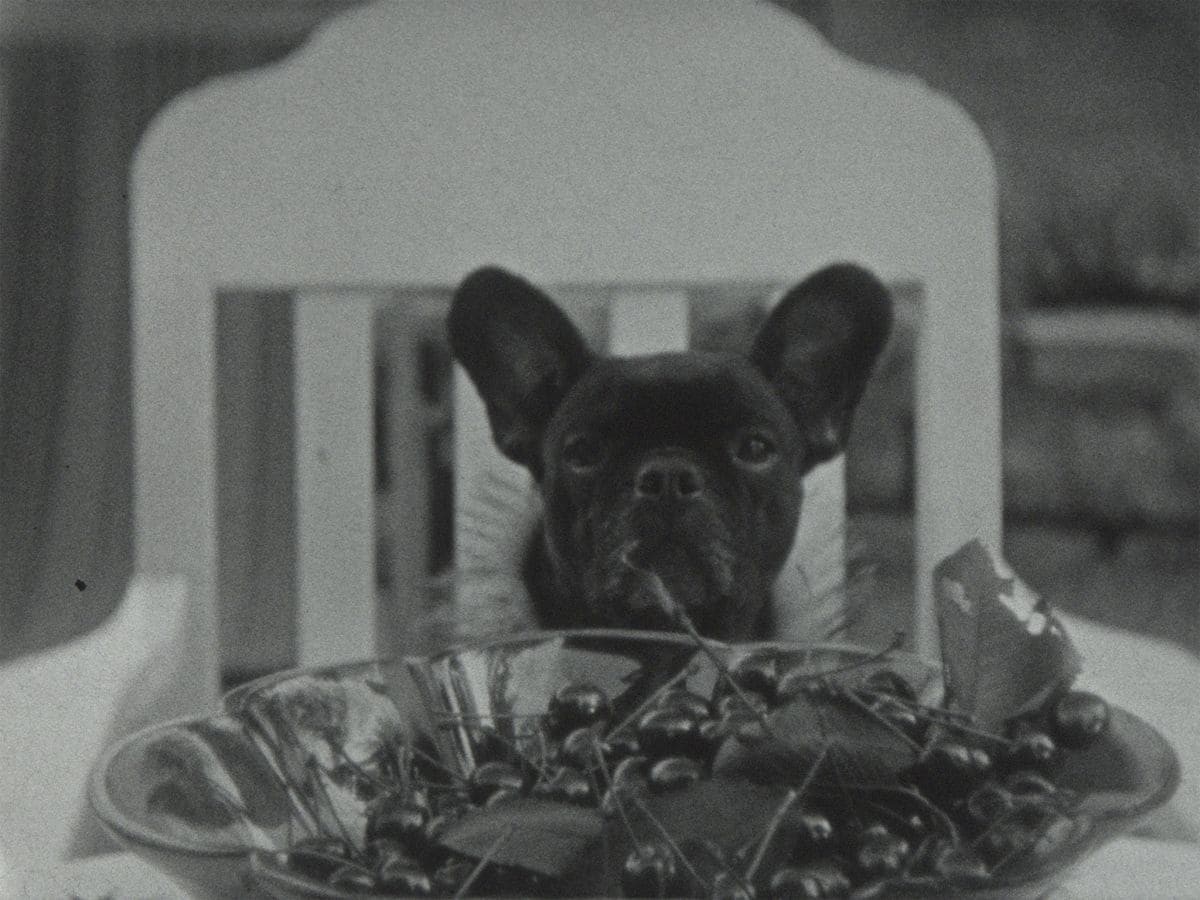
The Boehm family survived the Holocaust and could escape. The films, which document life before the escape, stayed behind: smoking next to a suitcase-sized gramophone with aunt Marie Boehm in Neubabelsberg, trips across Europe in a Gräf & Stift model touring car with the French bulldog in the back seat, dances in a forest clearing. In 2026, we were able to contact descendants of the Boehm family in England and Canada. They will be present at the screening. (Stefanie Zingl, Florian Haag / Translation: Ted Fendt)
Our program series Flotsam is devoted to examples of ephemeral film: archive finds, film documents, unpublished and fragmented film material that have become a subject of research and curatorial attention in the Film Museum.
In the fall of 1991, a package of sixteen anonymous 16mm amateur films from the late 1920s and early 1930s landed in the Film Museum's collection. Their origins are unclear and the person who brought them can no longer be contacted. The films themselves are therefore the most important source of information.
A car's license plate number and a nameplate on an apartment door are the starting point for research whose preliminary end connected two names to the package: Julius Edgar Boehm, a Jewish lawyer in Berlin, whose life can be reconstructed in detail, as well as a woman, May Fürst, who can only be understand fragmentarily.
The Boehm family survived the Holocaust and could escape. The films, which document life before the escape, stayed behind: smoking next to a suitcase-sized gramophone with aunt Marie Boehm in Neubabelsberg, trips across Europe in a Gräf & Stift model touring car with the French bulldog in the back seat, dances in a forest clearing. In 2026, we were able to contact descendants of the Boehm family in England and Canada. They will be present at the screening. (Stefanie Zingl, Florian Haag / Translation: Ted Fendt)
Our program series Flotsam is devoted to examples of ephemeral film: archive finds, film documents, unpublished and fragmented film material that have become a subject of research and curatorial attention in the Film Museum.